OFFICIAL DEATH CERTIFICATE
Paladins®
Evil Mojo Games
Born
2018-05-07
Game Over
2021-05-07
Peak Players
👾 10,000,000
Lifespan (3.0 years)
Vital Signs
Advertisement
Autopsy Report
Recovery Report
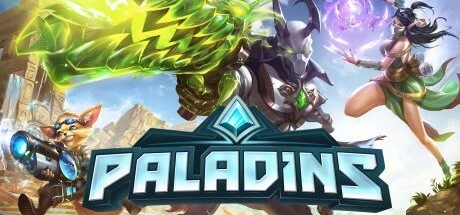
Paladins is a free-to-play, team-based hero shooter developed by Evil Mojo Games and published by Hi-Rez Studios — a 5v5 champion shooter blending first-person mechanics with MOBA-style deck customization, targeting the same audience as Overwatch but at zero cost of entry. It entered Early Access in September 2016, rode the hero shooter wave, and officially launched on May 7, 2018. By that point, the market had already made its choice.
The numbers tell a story of massive reach and modest retention. Paladins accumulated an estimated 10–20 million owners on Steam and 345,563 reviews at 85% positive — a “Very Positive” rating that reflects genuine player satisfaction, not nostalgia revisionism. But as of April 2026, the game sits at 759 concurrent Steam players. That gap between 10–20 million owners and 759 active players is the entire Paladins story compressed into two numbers.
What nearly killed it wasn’t bad design — it was bad timing compounded by an identity crisis. Paladins spent its critical growth window in Early Access, emerging as a finished product in May 2018 directly into Fortnite’s cultural supernova and an Overwatch-dominated genre. The “Overwatch clone” label — unfair but sticky — followed it everywhere. When Apex Legends launched in February 2019 and Valorant in June 2020, the remaining oxygen for mid-tier hero shooters evaporated. The inferred death date in the data pipeline defaulted to May 2021 (three years post-launch), flagged explicitly as low confidence with “no strong signal detected.” That tells you everything: Paladins didn’t die in a dramatic moment. It just… persisted.
And persist it has. The game remains live, undelisted, and free as of April 2026. Its Steam header image was updated in April 2024 — years past its supposed death date — confirming continued publisher attention. The 85 average minutes played per session among current active players suggests the 759 holdouts aren’t idling; they’re genuinely playing. This is a stabilized survivor, not a corpse. The ambition of becoming a genre-defining title has been surrendered, but the servers are running and the community that remained chose to stay.
What Went Wrong (And Right)
-
Market Saturation (Wrong): Paladins launched its full release in May 2018 into a genre Overwatch had already won. With 10–20 million estimated owners but only 759 current Steam players, the install-to-retention rate reveals a market that welcomed free downloads but never genuinely needed another hero shooter. The F2P price advantage evaporated when Overwatch 2 went free-to-play in October 2022.
-
Identity Ambiguity (Wrong): The game’s Steam tags span Hero Shooter, FPS, MOBA, Strategy, and Massively Multiplayer simultaneously. That genre sprawl meant Paladins was perpetually compared against the best-in-class game in every category it touched — and lost every comparison. Its store description emphasized champion count over the card system’s genuine mechanical depth.
-
Genuine Product Quality (Right): An 85% positive rating across 345,563 reviews is not a small-sample fluke. Players who engaged meaningfully with Paladins largely liked it. Negative reviews cited Hi-Rez’s monetization decisions and the “clone” narrative far more than core gameplay failures — the product worked, the positioning didn’t.
-
Publisher Patience (Right): As both developer and publisher, Hi-Rez Studios faced no external pressure to sunset the game. The non-delisted status as of April 2026 — nearly 8 years post-launch — reflects a maintenance cost that has remained lower than residual revenue from the active base, allowing a loyal community to persist on its own terms.
Lessons for Developers
-
Free-to-play acquisition is not retention. Paladins drove 10–20 million estimated owners through zero-cost entry, but the owners-to-review ratio of approximately 29:1 confirms most never engaged deeply enough to leave a review. Downloads are not players. Build identity clarity before launch — the comparison narrative gets written in the first 30 days.
-
Review scores mask retention health. An 85% positive rating coexisting with 759 concurrent players proves that sentiment metrics measure the satisfied minority, not the broader installed base. For live-service titles, population data is always the more honest health signal.
-
Live-service games need minimum viable population plans. At 759 players globally in a 5v5 format, queue times become prohibitive — which accelerates further decline. Plan server consolidation, bot-fill policies, and cross-platform pooling before population drops below the matchmaking viability threshold.
Similar Cases
- Battleborn — Gearbox’s hero shooter launched the same month as Overwatch, earned genuine affection from its core audience, and was similarly consumed by market saturation and the “clone” comparison dynamic before never recovering viable population.
- Gigantic — A hero shooter with genuinely distinct mechanics that stabilized into a dedicated niche community before ultimately reaching server closure in 2018 — a cleaner endpoint than Paladins’ current maintenance limbo.