CRITICAL CONDITION REPORT
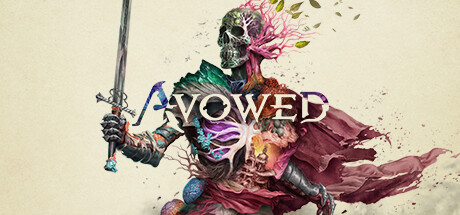
Avowed
Obsidian Entertainment
Born
2025-02-17
Status: Declining
2026-04-04
Lifespan (1.1 years)
Vital Signs
Advertisement
Autopsy Report
Autopsy Report
Avowed is not a bad game. Seventy-seven percent of its 12,112 reviewers said so. Obsidian Entertainment — the studio behind Fallout: New Vegas, Pillars of Eternity, and The Outer Worlds — delivered a competent first-person RPG with meaningful choices, solid writing, and a world rich in lore. And 263 people are playing it right now. In the post-Baldur’s Gate 3 RPG market, competent is invisible.
Obsidian announced Avowed in July 2020 as its most ambitious first-person RPG to date, set in the Pillars of Eternity universe of Eora. The gaming public heard “Skyrim by the Outer Worlds studio” and set their expectations accordingly. What they got, nearly five years later, was a focused 25-30 hour adventure — thoughtful, well-crafted, and roughly one-fifth the length of Elden Ring at the same price point. In a market where the RPG audience had just finished 100+ hours of Baldur’s Gate 3, Avowed’s modest scope felt like arriving at a dinner party with a sandwich.
The numbers tell a story of muted impact from the start. A peak of approximately 19,000 concurrent Steam players is a quiet launch for a AAA RPG from a major publisher. Starfield, for comparison, hit 330,000 on its launch day — and Starfield was considered a commercial disappointment. The 12,112 total reviews, while respectable, pale against the hundreds of thousands that blockbuster RPGs generate. At 883 reviews per month over 14 months, Avowed never achieved the critical mass needed for cultural relevance.
Game Pass cannibalized the game before it could build purchase momentum. Day-one availability on Xbox Game Pass meant the most engaged Xbox audience — the exact demographic Avowed was targeting — had zero reason to buy it. They could download it, play it over a weekend, and move on. This creates a particularly poisonous dynamic for single-player RPGs: engagement without investment. Players who pay $70 for a game feel committed to seeing it through. Players who accessed it “for free” through a subscription treat it as one option among dozens, easily replaced by the next Game Pass addition.
The Pillars of Eternity setting worked against Avowed in the mainstream market. Eora’s intricate lore is brilliant material for isometric RPGs with paragraph-long dialogue trees. Translated to a first-person action RPG, the density became a barrier. Newcomers felt overwhelmed; Pillars devotees felt the lore was diminished by real-time combat and streamlined dialogue.
With 263 concurrent players, Avowed has settled into what looks like a long tail but, for a game reportedly budgeted at over $100 million, is an epitaph. Avowed is exactly the kind of game Obsidian excels at: a mid-scope RPG with sharp writing and interesting companions. In 2015, it would have been a hit. In 2025, it was a footnote.
Key Failure Factors
-
Post-BG3 Expectations: Baldur’s Gate 3 won every Game of the Year award and delivered 100+ hours of deeply reactive RPG content. Avowed launched six months later offering a third of the playtime at full price. The comparison was unfair but unavoidable.
-
Game Pass Value Erosion: Day-one Game Pass availability removed purchase commitment. For single-player RPGs, this creates “try and discard” behavior that suppresses both sales and long-term engagement. The 500k-1M Steam owners figure is modest for a AAA RPG.
-
Niche IP in Mainstream Clothing: Pillars of Eternity’s rich lore appeals to CRPG enthusiasts but confused the broader action RPG audience. The game was too dense for newcomers and too streamlined for Pillars devotees.
-
Mid-Scope Identity Crisis: In 2025, RPGs are either massive open worlds (Elden Ring, Starfield) or deeply reactive narratives (BG3). Avowed’s 25-30 hour focused experience fell into a no-man’s land that the market no longer supports at premium pricing.
Lessons for Developers
-
Game Pass day-one is a trade-off, not a perk. For live service and multiplayer games, Game Pass provides a massive installed base. For single-player RPGs, it provides a massive audience that plays for a weekend and moves on. The business model must match the game type.
-
After a genre landmark, the bar resets for everyone. Baldur’s Gate 3 did to RPGs what Breath of the Wild did to open worlds. Every subsequent RPG is measured against the new standard, regardless of whether the comparison is fair. If you’re launching after a genre-defining release, you need to offer something it doesn’t — not less of what it does.
-
Niche IP requires a choice: commit to the niche or commit to the mainstream. Avowed tried to bring Pillars of Eternity to the action RPG audience while also serving Pillars fans. The result satisfied neither fully. Pick your audience and design entirely for them.
-
Scope and price must align with market reality. A 25-hour RPG at $70 is a hard sell when competitors offer 100+ hours at the same price or less. Either expand the scope, lower the price, or offer something so unique that hour-for-hour comparisons become irrelevant.
Related Deaths
- The Outer Worlds — Obsidian’s previous first-person RPG followed the same pattern: well-reviewed, modest scope, rapid player decline. A warning sign that went unheeded.
- Starfield — Bethesda’s own Xbox-published RPG suffered from similar Game Pass cannibalization and middling long-term engagement despite massive launch numbers.
- Redfall — Arkane’s Xbox-published shooter-RPG that demonstrated the worst case of Game Pass devaluation: played briefly, discarded permanently.
- Forspoken — Square Enix’s action RPG that proved mid-scope AAA games at full price face an existential market challenge.