OFFICIAL DEATH CERTIFICATE
ATLAS
Grapeshot Games
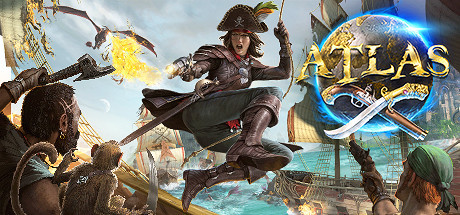
Born
2018-12-21
Game Over
2021-12-21
Peak Players
👾 1,000,000
Lifespan (3.0 years)
Vital Signs
Advertisement
Autopsy Report
Autopsy Report
ATLAS launched on December 21, 2018 as one of the most ambitious Early Access pitches in survival game history: a massively multiplayer pirate sandbox from Grapeshot Games — the studio behind ARK: Survival Evolved — promising thousands of simultaneous players sailing, building, and fighting across “one of the largest game worlds ever built.” Priced at a premium A$42.95, it had the ARK pedigree, the pirate fantasy, and enormous launch anticipation. It had almost everything, in fact, except working servers.
The launch was catastrophic. Players who showed up for the grand pirate MMO experience found login queues, crashes, widespread bugs, and infrastructure that buckled immediately under player load. The market responded with brutal speed: of 42,845 total Steam reviews, 22,630 are negative — a 53% majority-negative ratio that earned the game a permanent “Mixed” label. That verdict was baked in almost immediately and never recovered. Nearly half of reviewing players found something worth praising, which suggests genuine content existed beneath the wreckage — but the majority-negative lock-in suppressed organic discovery and new player acquisition from that point forward.
The scale of the commercial failure becomes clearest when you stack the numbers against each other. ATLAS attracted an estimated 1–2 million owners — an enormous commercial footprint driven by the ARK connection and pirate marketing. Today, it runs 266 concurrent players. That owner-to-current-player ratio isn’t a decline; it’s an evacuation. For an MMO explicitly designed around “thousands of other players,” 266 concurrent players globally means the core product — naval warfare, crew assembly, territory control — is functionally inaccessible. The game’s own store description still promises a world filled with thousands of players. That description hasn’t been updated. It’s marketing for an experience that no longer exists.
The deeper structural failure was attempting to graft MMO-scale population requirements onto a survival sandbox framework without MMO-scale infrastructure. ARK survived a messy Early Access period because its server-based model didn’t require a global player population to function — small servers could deliver the full experience. ATLAS needed the crowd to deliver the promise. When that crowd arrived on launch day and the servers collapsed, it didn’t just create bad reviews; it destroyed the social foundation the game needed to survive. Communities that disperse at launch don’t reassemble. Grapeshot spent approximately 37 months — 1,096 days — patching, reworking maps, and redesigning systems, but the 47% positive score never inverted. The average playtime among the 266 players still logging in is 56 minutes in two weeks. These aren’t players. They’re ghosts.
Market context made recovery even harder. December 2018 was a saturated, hostile environment for a premium Early Access survival MMO. Rust was thriving. Sea of Thieves had launched in March of the same year. ARK itself was still active. Entering one of Steam’s most crowded genre intersections — Survival, Open World, Massively Multiplayer, Early Access — with a broken product and no goodwill buffer left ATLAS with nowhere to hide.
Key Failure Factors
-
Broken at Launch: With 22,630 negative reviews comprising 53% of 42,845 total, the majority-negative ratio was established in the launch window and never corrected. Server infrastructure couldn’t handle player load on day one — for an MMO, the infrastructure is the product.
-
Live Service Collapse: ATLAS was architecturally dependent on a large concurrent population. At 266 current players, the game cannot deliver naval combat, crew mechanics, or territory warfare at any meaningful scale. The design requires a crowd the game no longer has.
-
Market Saturation: The game’s own death signals explicitly flag “oversaturated genre/tags with below-average reviews.” Entering a crowded survival sandbox market in broken condition with established competitors like Rust and Sea of Thieves left no margin for a redemption arc.
-
Premium Pricing, Unfinished Product: A$42.95 for Early Access sets a “minimum viable experience” expectation. ATLAS violated that contract on launch day, turning its premium price point from a revenue asset into a reputation liability.
Lessons for Developers
-
MMO infrastructure is the product, not a launch-day patch item. A game requiring “thousands of other players” to function cannot soft-launch its server capacity. ATLAS’s 22,630 negative reviews trace directly to infrastructure failure at the moment of maximum player interest.
-
Premium Early Access pricing demands a functional baseline. At A$42.95, players aren’t buying potential — they’re buying access to a working experience. The Early Access label provides legal cover, not reputational protection.
-
A famous predecessor amplifies launch damage. The ARK pedigree drove an estimated 1–2 million owners to purchase — and then leave. High expectations from a beloved IP don’t buy forgiveness; they raise the stakes of failure.
Related Deaths
- Bless Online — another MMO that launched with high expectations and broken technical infrastructure, collapsing under the weight of its own promises before the community could form.
- Worlds Adrift — similarly ambitious physics-sandbox MMO that launched broken, couldn’t rebuild its reputation, and ultimately shut down when its population became unviable.