OFFICIAL DEATH CERTIFICATE
Vampire: The Masquerade - Bloodhunt
Sharkmob AB
Born
2022-04-26
Game Over
2026-04-01
Lifespan (3.9 years)
Vital Signs
Advertisement
Autopsy Report
Autopsy Report
Bloodhunt was the most beautiful battle royale ever made, and it still died. That sentence contains everything you need to know about the BR market in the 2020s: atmosphere, style, and even a beloved IP license cannot overcome the gravitational pull of established games in a genre driven by network effects.
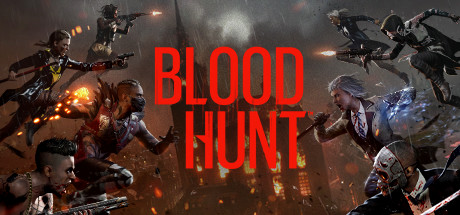
Sharkmob AB — a Swedish studio founded by former Ubisoft Massive developers who built The Division — set Bloodhunt in a night-drenched Prague consumed by a supernatural war between vampire clans. Players chose from vampire archetypes with distinct supernatural abilities, scaling Gothic architecture, dashing across rooftops, and combining gunplay with powers like blood-fueled dashes and soul-seeking projectiles. The Vampire: The Masquerade license, beloved by millions of tabletop RPG players, gave the game instant thematic identity. The 77% positive review rate from 58,726 reviews confirms that the experience worked: players who engaged with Bloodhunt found something atmospheric and mechanically satisfying.
But atmosphere doesn’t fill lobbies. The 2-5 million estimated owners shows that the free-to-play model and VtM brand drove impressive initial downloads. The 123 concurrent players at data collection shows that almost none of those downloaders stayed. The gap between those numbers is the story of every battle royale that launched after 2020 into a market already owned by Fortnite, Apex Legends, PUBG, and Warzone.
Bloodhunt’s core pitch — “it’s a battle royale, but you’re vampires in Prague” — was a reskin proposition, not a genre innovation. The supernatural abilities added flavor to gunfights but didn’t fundamentally change the battle royale loop: drop, loot, fight, shrink, repeat. Players who wanted ability-based BR combat were already deeply invested in Apex Legends. Players who wanted the Vampire: The Masquerade fantasy were waiting for Bloodlines 2, not a BR. The Venn diagram of “VtM fans who want a battle royale” and “BR players who want vampire theming” produced an audience too small to sustain multiplayer matchmaking.
The timeline tells its own grim story. Bloodhunt launched in April 2022 after early access in 2021. By May 2023 — barely thirteen months later — Sharkmob announced the end of active development. For a live service battle royale, content abandonment is a slow execution. Players expect seasonal drops, new weapons, map changes. Without them, even the most loyal drift to games still being fed. Bloodhunt’s servers ran on life support for three more years, a slowly emptying Prague where 123 vampires haunted the rooftops like ghosts of a game that deserved better.
The 1,224 reviews per month across the game’s lifespan is moderate but tells a story of unsustained engagement. Compare this to Apex Legends’ relentless content cadence or Fortnite’s weekly updates, and the content gap becomes clear. Sharkmob simply didn’t have the resources — or the revenue from a dwindling player base — to sustain the content pipeline that a live service BR demands.
When the servers finally shut down in April 2026, the remaining community accepted it with weary resignation. They had known since 2023 that Bloodhunt was dying. The beauty of Prague at night, the thrill of rooftop traversal — all of it dissolved into the same void that claimed Spellbreak, Realm Royale, and every other BR that tried to crack a consolidated market with style instead of scale.
Key Failure Factors
-
Battle Royale Market Already Closed to New Entrants: By 2022, Fortnite, Apex, PUBG, and Warzone had consolidated the BR audience. Bloodhunt’s vampiric twist wasn’t enough differentiation to justify switching from a game where players had years of investment.
-
VtM IP Mismatch with BR Audience: The Vampire: The Masquerade fanbase wanted narrative RPG experiences, not competitive multiplayer. The BR audience wanted faster content and tighter gunplay, not gothic atmosphere. Neither audience was fully served.
-
Content Drought After 13 Months: Sharkmob ceased active development in May 2023, leaving the game without new content for three years. A live service BR without content updates is a game with a visible expiration date.
-
Atmosphere Over Gameplay Innovation: Bloodhunt’s vampiric abilities added aesthetic flavor but didn’t fundamentally change the BR formula. Players needed a reason to switch from their main BR, and “prettier rooftops” wasn’t it.
Lessons for Developers
-
Atmosphere and IP are discovery tools, not retention tools. Players don’t main a game for vibes — they main it for mechanics, community, and content cadence. Your aesthetic gets people in the door; your gameplay loop keeps them there.
-
Match your IP to your audience, not your genre. VtM fans want narrative depth and player choice. Building a battle royale for this IP was a fundamental audience mismatch. License IPs whose existing fans actually want the type of game you’re building.
-
Don’t launch a live service without the resources to sustain it. If your budget only covers launch plus 12 months, you’re building a game with a built-in expiration date. Plan your content pipeline and funding before you ship.
-
The BR genre punishes “good enough” more than any other. A 77% positive rate is solid for single-player. In battle royale, where players commit to one game and build social bonds, “solid” loses to “established” every time. You need a 10x differentiator, not a 10% improvement.
Related Deaths
- Hyper Scape — Ubisoft’s urban battle royale with innovative vertical traversal that died within a year, proving that even AAA studios with novel mechanics can’t crack the consolidated BR market.
- Spellbreak — A magic-based battle royale with excellent ability combat that earned positive reviews and died from the same market saturation that killed Bloodhunt.
- Realm Royale — Hi-Rez’s fantasy BR that spiked to massive popularity and collapsed rapidly, demonstrating the pattern of high initial interest and catastrophic retention in the late-stage BR market.
- Darwin Project — A show-format BR with creative innovations that couldn’t retain players against the established competition.