CRITICAL CONDITION REPORT
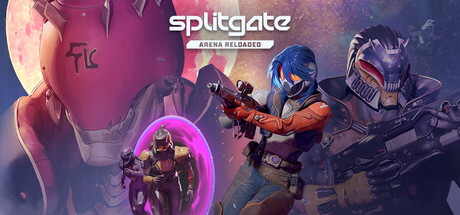
Splitgate: Arena Reloaded
1047 Games
Born
2025-05-21
Status: Declining
2026-04-04
Lifespan (0.9 years)
Vital Signs
Advertisement
Autopsy Report
Autopsy Report
In the summer of 2021, Splitgate was the hottest game in the world. Server queues hit 600,000. “Halo meets Portal” was the pitch, and millions of players showed up to prove the concept worked. 1047 Games — a tiny indie studio — raised over $100 million in venture funding on the back of that viral explosion.
Four years, $100 million, and one catastrophic decision later, Splitgate: Arena Reloaded has 428 concurrent players and a 21-minute average session time.
The catastrophic decision was this: in early 2024, 1047 Games shut down the original Splitgate — which still had an active community — to focus entirely on building a sequel. The logic was straightforward. The original game had technical limitations that constrained its growth. A ground-up rebuild would let them realize the vision properly. The $100 million in VC funding demanded a bigger product, not incremental updates.
What 1047 Games didn’t account for was that gaming communities are ecosystems, not customer databases. You can’t disband an ecosystem and expect it to reassemble on command. When the original Splitgate went dark, its players scattered to Valorant, Counter-Strike, Fortnite, and a dozen other shooters. They built new habits, new friend groups, new muscle memory. By the time Arena Reloaded launched on May 21, 2025, the community that made Splitgate special was gone.
The game that arrived was also confused about what it wanted to be. The description tells the story: “fuses the best of Splitgate 1 & 2, bringing back that classic arena shooter feel” while also offering “Arena Royale, a battle royale built on arena DNA.” That’s two pitches in one sentence, and the 64% positive review rate — “Mixed” on Steam — reflects a community that bought neither. Arena purists saw the battle royale mode as a dilution of the portal-shooter identity. Battle royale players had Fortnite and Warzone. The 21,740 reviews show passionate engagement, but the 36% negative rate concentrates on identity confusion and comparisons to the better original.
The timing couldn’t have been worse. By 2025, the arena shooter renaissance that Splitgate seemed to herald in 2021 had proven to be a mirage. Halo Infinite — the genre’s biggest name — launched in late 2021 and watched its multiplayer population crater. If Master Chief couldn’t sustain an arena shooter audience, a portal gimmick wasn’t going to either. The market had spoken: traditional arena modes work as a feature within larger games (see Fortnite’s Creative mode), not as standalone products in 2025.
The 21-minute average playtime in the last two weeks is the statistic that should haunt 1047 Games’ investors. Twenty-one minutes. In a free-to-play game. Players are logging in, playing a match or two, and leaving — if they even finish a match. For a game that’s supposed to be a live-service platform, 21 minutes of engagement per two-week period is a death rattle.
At 428 concurrent players, Arena Reloaded can’t reliably fill its own matchmaking pools. The game offers both arena modes and battle royale, splitting an already tiny population across multiple playlists. When a free-to-play game with no price barrier and a unique mechanical hook can’t crack 500 concurrent players within a year of launch, the problem isn’t marketing or monetization — the product failed to find an audience that wants to exist.
The $100 million question — literally — is what happens next. 1047 Games spent VC money building a product for a market that didn’t materialize. The original Splitgate proved the portal concept was fun. Arena Reloaded proved that fun isn’t enough when the audience has moved on and the product can’t decide what it is.
Key Failure Factors
-
Killed the Original Community: Shutting down a live game with active players to build a replacement scattered the community irreversibly. Gaming communities don’t hibernate — they migrate. 600K queues in 2021 became 428 players in 2026.
-
Mistook a Viral Spike for a Sustainable Market: Splitgate’s 2021 explosion was a novelty-driven spike amplified by pandemic gaming habits. Raising $100M and planning a multi-year rebuild treated that moment as a baseline, not a peak.
-
Identity Crisis Between Arena and Battle Royale: Trying to be both a “classic arena shooter” and a battle royale diluted the portal mechanic that was the game’s only unique selling point. Neither audience got the game they wanted.
-
Arena Shooter Market Proved Smaller Than Hoped: Halo Infinite’s struggles confirmed that traditional arena shooters can’t sustain mainstream audiences in the 2020s. Even the genre’s most iconic franchise couldn’t hold players.
Lessons for Developers
-
Never kill a live game to build its replacement. If you need to rebuild, do it in parallel. Keep the original running. Migrating a community is hard; resurrecting one from a multi-year shutdown is nearly impossible.
-
Viral moments are spikes, not baselines. Distinguish between “people are excited about this novelty” and “this has proven long-term retention.” Only the latter justifies massive investment. Splitgate’s 2021 peak was the former.
-
Pick an identity and commit. The strongest competitive games have a clear, defensible identity. Splitgate’s portal mechanic was unique and compelling. Diluting it with battle royale and live-service bloat made the game forgettable instead of distinctive.
-
The market tells you what it wants — listen. By the time Arena Reloaded launched, multiple high-profile arena shooters had failed to sustain audiences. Proceeding anyway wasn’t conviction — it was $100 million worth of hope overriding evidence.
Related Deaths
- Halo Infinite — The biggest arena shooter brand in history couldn’t sustain a multiplayer population, proving the genre’s mainstream viability problem.
- LawBreakers — Cliff Bleszinski’s arena shooter that launched into the Overwatch era and flatlined immediately, an earlier warning about arena shooter market size.
- Hyenas — SEGA’s F2P shooter cancelled before launch after internal testing showed the same retention problems Arena Reloaded now faces.