Official Death Certificate
Mini Ninjas
IO Interactive
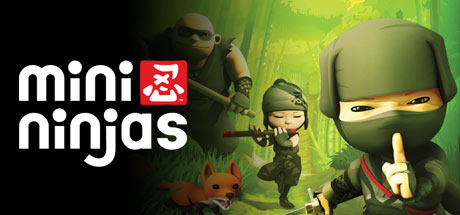
Born
2009-09-13
Game Over
2017-12-23
📊 VITAL SIGNS
Advertisement
Autopsy Report
Mini Ninjas is the rarest specimen in our morgue: a game that died loved. With a 90% positive rating across 4,708 Steam reviews, this isn’t a story about a bad game. It’s a story about a good game born on the wrong platform, in the wrong window, by a studio that was always going to walk away.
IO Interactive — yes, the Hitman people — took a creative detour in 2009 and built a colorful, family-friendly ninja adventure published by Square Enix. Critics smiled. Players who found it were charmed. The problem? Almost nobody found it. The game launched in September 2009, directly into the maw of one of gaming’s most stacked quarters: Uncharted 2, Assassin’s Creed 2, Batman: Arkham Asylum, Call of Duty: Modern Warfare 2, and Left 4 Dead 2 all dropped within weeks. A cute ninja game about saving woodland animals never stood a chance in that lineup.
But the real killer wasn’t competition — it was platform-audience mismatch. Family-friendly action-adventures live on Nintendo consoles, not PC. Mini Ninjas’ target demographic — younger players, families, people who want a relaxing 8-12 hour romp — overwhelmingly plays on hardware with parental controls and physical media. On PC in 2009, the audience skewed older and hungrier for competitive multiplayer, strategy, and mature themes. The result: 200,000-500,000 owners across 17 years, a number that would be respectable for a small indie but is underwhelming for a AAA-studio game backed by a major publisher.
IO Interactive sealed the coffin by immediately pivoting back to Hitman. No DLC. No sequel. No patches. Mini Ninjas was a palate cleanser between assassination simulators, and once it shipped, the studio moved on entirely. When IO completed their management buyout from Square Enix in 2017 — effectively the game’s symbolic death date — they didn’t even take the Mini Ninjas IP with them. The game that 90% of its players loved was orphaned by the people who made it.
Today, 4 players keep a candle burning on Steam. Someone buys it on sale, plays through once, leaves a “hidden gem” review, and moves on. Mini Ninjas didn’t crash and burn. It simply faded, slowly and peacefully, like a ninja vanishing into morning mist. Death score: 50 out of 100 — the gentlest death in our records.
Key Failure Factors
-
Platform Mismatch: A family-friendly game released on PC, where its target audience barely existed. The same title on Nintendo platforms would have had a fundamentally different trajectory — compare its modest 200K-500K PC owners to the millions that similar-quality family games moved on Wii and DS.
-
Murder Row Launch Window: Q4 2009 was a generational release window. Arkham Asylum, Uncharted 2, AC2, MW2, and L4D2 consumed every inch of press coverage, YouTube bandwidth, and consumer budget. Mini Ninjas didn’t just lose the launch — it lost the word-of-mouth that drives long-term discovery.
-
Studio Pivot: IO Interactive began Hitman: Absolution development immediately after shipping Mini Ninjas. The game received zero post-launch support — no DLC, no content updates, no community engagement. It was a one-and-done experiment from a franchise studio that returned to its core identity.
-
No Retention Hooks: A single-player game with no multiplayer, no modding support, and no user-generated content has a natural expiration date. Its 101-month lifespan is actually healthy for a single-player title — but the end was always inevitable without community-driven longevity.
Lessons for Developers
-
Platform-audience fit trumps game quality. A 90% positive rating and AAA pedigree couldn’t overcome a fundamental mismatch between the game’s audience (families, younger players) and the platform’s audience (older, competitive-leaning PC gamers). Know where your players actually live before you ship.
-
One-off experiments from franchise studios get orphaned. When a studio is defined by a single IP, creative departures are treated as experiments, not new pillars. Mini Ninjas never had a sequel because IO Interactive’s identity — and publisher pressure — pulled them back to Hitman. If you’re going to diversify, commit to the new IP or don’t bother.
-
Launch windows can bury a game permanently. Games that launch in stacked quarters don’t just lose initial sales — they lose the press coverage and content creator attention that drive years of discovery. Mini Ninjas never recovered its launch momentum because it never had any to begin with.
-
Single-player games without community hooks have expiration dates. Without multiplayer, mods, or ongoing content, a game’s lifespan is bounded by how long it takes the addressable audience to play through it once. Contrast with A Hat in Time (2017), a similar family-friendly platformer that thrived on PC by building a modding community.
Related Deaths
- Brutal Legend — another charming creative departure from a celebrated studio (Double Fine) that confused its target audience with genre mixing and faded despite critical warmth.
- Beyond Good & Evil — a critically acclaimed action-adventure that underperformed commercially due to platform and timing, becoming the definitive “cult classic that deserved better.”
- Kingdoms of Amalur: Reckoning — a well-reviewed single-player RPG that faded due to studio circumstances rather than game quality, proving that good reviews don’t guarantee survival.