OFFICIAL DEATH CERTIFICATE
Knockout City
Velan Studios
Born
2021-05-20
Game Over
2023-06-06
Lifespan (2.0 years)
Vital Signs
Advertisement
Autopsy Report
Autopsy Report
Knockout City is the best game nobody played long enough to save. An 86% positive review score across 8,405 reviews makes it one of the highest-rated dead games in our dataset — and one of the saddest autopsies to write, because the cause of death wasn’t bad design or greedy monetization. It was math. Multiplayer games have a minimum viable population, and Knockout City never stayed above it long enough.
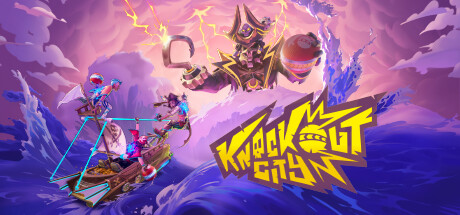
The concept was brilliant: competitive team-based dodgeball with throws, catches, passes, fakes, lobs, and — in the game’s most delightful twist — the ability to literally ball yourself up for a teammate to throw. Developed by Velan Studios, founded by the same people who created Guitar Hero through Vicarious Visions, the game dripped with mechanical polish and creative joy. Every match was a chaotic ballet of skillshots and teamwork.
EA published the game at launch, bringing marketing muscle and distribution reach. The 500,000-1,000,000 estimated Steam owners (plus additional players on PlayStation, Xbox, and Switch) confirm that the game successfully attracted an initial audience. The 86% positive rate shows that audience overwhelmingly enjoyed what they found. The problem was keeping them.
Dodgeball — even brilliantly executed dodgeball — is a niche proposition for a competitive multiplayer game. The game launched in May 2021 into a multiplayer landscape dominated by Fortnite, Apex Legends, Valorant, and Rocket League, all free-to-play, all with massive established communities and social gravity. Asking players to invest their competitive gaming time in dodgeball when their friend groups were in shooters and MOBAs was a tough sell, regardless of quality.
The 141.7 reviews per month velocity is moderate — healthy for its size but insufficient for a multiplayer game that needed thousands online at all times across multiple regions and skill tiers. When queue times grew, players left. When players left, queue times grew. The death spiral is the most predictable phenomenon in multiplayer gaming, and Knockout City hit it within months.
EA’s decision to drop publishing support roughly a year after launch was the first coffin nail. Velan bravely took over self-publishing and pivoted to free-to-play, but the F2P transition couldn’t overcome the momentum already lost. The audience that might have found the game through EA’s marketing apparatus simply never learned it existed under Velan’s limited reach.
Servers shut down in June 2023. Zero concurrent players. The dodgeball courts are empty, and unlike a single-player game that can be revisited, Knockout City requires other people to function. It is now completely unplayable — not archived, not preserved, just gone.
Key Failure Factors
-
Niche Concept Below Population Threshold: Competitive dodgeball has a natural audience ceiling far below what a team-based multiplayer game needs to sustain healthy matchmaking. The 86% positive score from 8,405 reviews proves the game was excellent; the 0 concurrent players proves excellence has a population floor.
-
Multiplayer Market Saturation: Launching against Fortnite, Apex, Valorant, and Rocket League meant competing for a finite resource — player time in multiplayer games. Free-to-play giants with established social graphs win that competition every time against newcomers.
-
Lost Publisher Support: EA dropping Knockout City removed the game’s primary new player acquisition engine. Velan’s self-publishing couldn’t replace EA’s marketing reach, and the F2P pivot came too late to rebuild the population.
-
The Death Spiral Is Unforgiving: Once queue times cross a threshold, the decline becomes self-reinforcing. Each player who leaves makes the experience worse for everyone who stays. With 0 concurrent players, the spiral reached its mathematical conclusion.
Lessons for Developers
-
Quality cannot overcome population math in multiplayer games. Knockout City’s 86% positive reviews are proof of a great game. Its 0 concurrent players are proof that great games still die when they can’t sustain matchmaking queues. Before building a multiplayer game, model the minimum viable population and honestly assess whether your concept can reach it.
-
Novel sport concepts need viral catalysts to escape their niche. Rocket League had its viral moment. Fall Guys had its viral moment. Knockout City, Roller Champions, and Rumbleverse didn’t. In the novel-sport-as-multiplayer-game category, only viral breakouts survive. You cannot manufacture virality, but you can design for it.
-
Losing your publisher in a live service game is a near-death sentence. EA’s departure removed marketing, distribution, and platform relationships that an indie studio cannot replicate. If your multiplayer game depends on a publisher for player acquisition, their exit is your game’s countdown timer.
Related Deaths
- Roller Champions — Ubisoft’s roller derby game followed the identical trajectory: praised mechanics, insufficient audience, servers shut down. The pattern is consistent for novel-sport multiplayer games.
- Rumbleverse — Another novel competitive multiplayer game (wrestling battle royale) that died from the same population crisis, reinforcing that the category has a fundamental viability problem.
- LawBreakers — A mechanically praised multiplayer game that couldn’t find an audience in a saturated market, proving the pattern extends beyond sports-themed games.