OFFICIAL DEATH CERTIFICATE
Highguard
Wildlight Entertainment
Born
2026-01-25
Game Over
2026-02-28
Lifespan (0.1 years)
Vital Signs
Advertisement
Autopsy Report
Autopsy Report
Six players. That’s how many people were playing Highguard five weeks after it launched. Not six thousand. Not six hundred. Six human beings, scattered across a game that was designed for PvP raids, unable to fill a single match. Highguard didn’t die slowly — it cratered on impact.
The numbers are almost unbelievable. Highguard generated 40,572 Steam reviews in approximately five weeks — a velocity of 17,548 reviews per month that puts it in the same conversation as major AAA launch controversies. That kind of review volume means hundreds of thousands, possibly millions, of people downloaded and tried the game. They came for the promise of a PvP raid shooter where arcane gunslingers on mounts battled for control of a mythical continent. They left 22,105 negative reviews on the way out.
Highguard is a textbook example of what happens when a fundamentally broken game meets a massive audience. The 46% positive review score — meaning the majority of reviewers actively disliked it — signals problems that go beyond taste or preference into the territory of execution failure. In the extraction and raid shooter genre, first impressions are everything. Players decide within hours whether a game deserves their time, and Highguard’s first impression was apparently so poor that it triggered one of the fastest mass exoduses in modern gaming history.
The death spiral in multiplayer-dependent games is particularly vicious, and Highguard demonstrated it at unprecedented speed. A PvP game needs a minimum viable population to function — enough players to fill matches within reasonable queue times. When the first wave of players bounced off, queue times lengthened. Longer queues drove away the next layer of players. Within days, not months, the cascade was complete. By mid-February, the player count was in the triple digits. By the end of February, it was in the single digits.
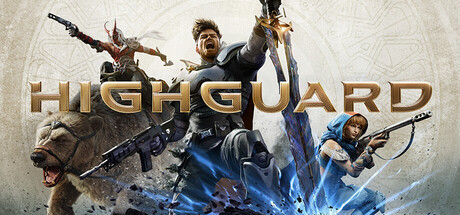
The genre context makes the failure even starker. Highguard launched into a 2026 extraction shooter market dominated by established titles — Escape from Tarkov, Hunt: Showdown 1896, Dark and Darker. Each of these games earned their player base through years of iteration, community trust, and hard-won gameplay balance. A new entrant needed either flawless execution or a genuinely revolutionary hook to compete. Highguard’s fantasy aesthetic and mount-based combat were visually distinctive, but a distinctive concept without solid fundamentals is a trailer, not a game.
The studio behind Highguard, Wildlight Entertainment, is relatively unknown. This makes the massive launch interest all the more remarkable — and the collapse all the more devastating. Something in the marketing or concept generated extraordinary initial curiosity. Tens of thousands of reviews in weeks suggests that the game’s premise resonated enough to drive massive downloads. The premise just couldn’t survive contact with the actual product.
With 6 concurrent players and zero average playtime over the last two weeks, Highguard is functionally offline. A PvP raid shooter with 6 people worldwide is not a game in decline — it’s a game that has already ended. The only question is whether Wildlight will formally acknowledge what the data has made obvious.
Key Failure Factors
-
Launch State Was Unacceptable: 46% positive from 40,000+ reviewers in five weeks means the game shipped with fundamental problems — likely server instability, broken combat feel, or both. The extraction shooter genre does not forgive rough launches.
-
Fastest Death Spiral on Record: From massive launch to 6 players in 34 days. In PvP games, losing your initial player base creates a feedback loop — longer queues drive away more players, which creates longer queues — that completes in days, not months.
-
Saturated Genre, No Differentiation: Fantasy mounts and arcane gunslingers are a visual hook, not a gameplay differentiator. The extraction shooter audience already has Tarkov, Hunt, and Dark and Darker. Highguard needed to be better, not just different-looking.
Lessons for Developers
-
In PvP games, launch day is judgment day. There are no second chances. If the core loop isn’t tight, the servers aren’t stable, and the gunfeel isn’t right on day one, you won’t get a day thirty. Highguard’s 34-day lifespan is the proof.
-
Review velocity is your fire alarm. 17,548 reviews per month with majority-negative sentiment is a five-alarm fire. If your game generates this pattern in the first 48 hours, every resource should go toward emergency triage on the core experience — not a content roadmap for a game nobody is playing.
-
Concept cannot survive broken execution. Arcane gunslingers on mounts is a compelling elevator pitch. But elevator pitches don’t fill lobbies — stable servers, fair balance, and satisfying gunplay do. Players will forgive a generic concept with flawless execution far sooner than a brilliant concept with broken fundamentals.
Related Deaths
- The Cycle: Frontier — Yager’s extraction shooter launched to interest, struggled to retain against Tarkov, and shut down after two years of decline.
- Radical Heights — Boss Key’s desperate battle royale pivot that collapsed even faster, from launch to studio closure in weeks.
- Crucible — Amazon’s hero shooter that launched, un-launched back into beta, and then shut down — another game that shipped before it was ready.