OFFICIAL DEATH CERTIFICATE
Bleeding Edge
Ninja Theory
Born
2020-03-23
Game Over
2022-03-23
Lifespan (2.0 years)
Vital Signs
Advertisement
Autopsy Report
Autopsy Report
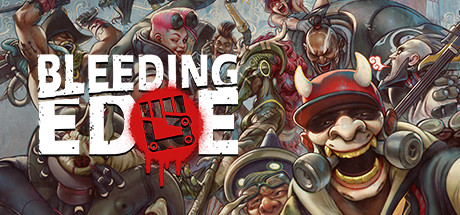
The studio that made Hellblade: Senua’s Sacrifice — a BAFTA-winning masterpiece of psychological storytelling, motion capture, and atmospheric design — decided to make a multiplayer team brawler with no story, no campaign, and cyberpunk characters throwing each other around for no particular reason. The result was Bleeding Edge, a game that earned 1,579 reviews at 66% positive, which for a first-party Xbox studio on Game Pass is the statistical equivalent of a shrug.
Ninja Theory’s reputation was built on doing things nobody else could do: Senua’s psychosis rendered through binaural audio, mo-cap performances that rivaled cinema, narrative design that made players feel uncomfortable and enlightened simultaneously. Bleeding Edge used none of this. It was a 4v4 team-based melee combat game — MOBA-adjacent, hero-shooter-adjacent, brawler-adjacent, and ultimately adjacent to nothing at all because it couldn’t commit to being any single thing.
The numbers are damning across every dimension. Only 1,579 total reviews is staggeringly low for a game from an Xbox Game Studios first-party developer available on Game Pass at launch. For context, Knockout City — an indie dodgeball game — accumulated 8,405 reviews. Spellbreak got 13,997. Bleeding Edge’s 21.5 reviews per month is the lowest velocity in our dataset by a significant margin, reflecting a game that generated almost zero sustained community discussion.
At A$39.95, the game charged a premium price for multiplayer-only content in a market saturated with free alternatives. The 100,000-200,000 estimated owners suggests that even with Game Pass removing the financial barrier, most players simply weren’t interested. An owners-to-review ratio of 63x is normal; the raw ownership number is the problem. The game failed at the awareness and interest stages, not just retention.
The 66% positive “Mixed” rating reveals a game that couldn’t even convince its tiny audience. The Steam tags tell the story of a game in crisis: Action, MOBA, Hero Shooter, Fighting, Team-Based, Competitive, Cyberpunk. When your tag cloud reads like a genre buffet, you have an identity problem. Players couldn’t articulate what Bleeding Edge was for or why they should play it over Overwatch, League of Legends, Brawlhalla, or any other established team game.
Ninja Theory’s quiet abandonment was fitting. There was no dramatic announcement, no “end of support” blog post. The studio shipped one content update in June 2020 — adding two new fighters — and then the updates simply stopped. The entire team went back to making Hellblade II. By the time concurrent players hit zero, the only people who noticed were the ghosts still listed on the Steam page.
The game launched in March 2020, at the start of a global pandemic that created the largest captive gaming audience in history. That Bleeding Edge couldn’t capitalize on millions of people stuck at home looking for multiplayer games to play makes the failure more stark, not less.
Key Failure Factors
-
Studio Strengths Completely Absent: Ninja Theory’s core competencies — narrative design, atmospheric storytelling, mo-cap performance — were entirely absent from a multiplayer brawler with no campaign. The 66% review score for a game from the Hellblade studio reflects a product that could have been made by anyone.
-
Fatal Identity Crisis: The game tried to be a MOBA, a hero shooter, a brawler, and a competitive game simultaneously. It excelled at none. Only 1,579 reviews at 66% positive from a Game Pass title means even free access couldn’t generate meaningful interest.
-
Crowded Market, No Differentiator: Launched into a hero-based multiplayer space dominated by Overwatch, LoL, and the emerging Valorant. The melee focus was theoretically a differentiator but the execution — chaotic, unreadable teamfights — didn’t make the case.
-
The Battleborn Precedent Was Ignored: Gearbox’s Battleborn attempted the same MOBA-action-brawler hybrid in 2016 and died rapidly. Bleeding Edge repeated the formula four years later with identical results, suggesting the genre combination itself is fundamentally unviable.
Lessons for Developers
-
Build on your strengths, not against them. Ninja Theory’s return to form with Hellblade II confirmed what Bleeding Edge proved by absence: the studio’s value is in things no one else can do (narrative, atmosphere, performance). Building a generic multiplayer game wasted world-class talent on a product that didn’t need it.
-
Game Pass inclusion does not guarantee an audience. Despite zero-cost access for millions of subscribers, Bleeding Edge attracted only 100,000-200,000 estimated owners and 0 concurrent players. Removing the price barrier cannot create desire for a product players aren’t excited about.
-
The hero brawler genre has a proven failure pattern. Battleborn (2016) and Bleeding Edge (2020) both blended MOBA team composition with action combat and both died within months. The consistent failure suggests the genre combination has a fundamental appeal problem — not just an execution problem.
Related Deaths
- Battleborn — The most direct parallel: another hero-based multiplayer game that blended genres unsuccessfully, launched into a crowded market, and was functionally dead within months.
- LawBreakers — Another mechanically praised multiplayer game from a talented studio that couldn’t find an audience, proving the pattern extends beyond brawlers.
- Rocket Arena — EA’s multiplayer arena game that died rapidly in the same timeframe, reinforcing that the multiplayer market in 2020 was brutally inhospitable to newcomers.