OFFICIAL DEATH CERTIFICATE
Z1 Battle Royale
Daybreak Game Company
Born
2018-02-27
Game Over
2021-02-27
Peak Players
👾 10,000,000
Lifespan (3.0 years)
Vital Signs
Advertisement
Autopsy Report
Autopsy Report
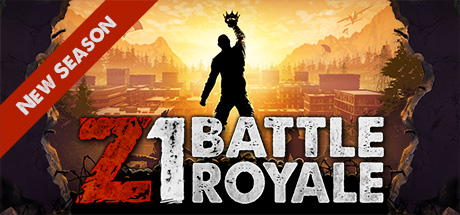
Z1 Battle Royale — formerly H1Z1: King of the Kill — was a free-to-play arcade battle royale shooter developed and published by Daybreak Game Company for PC. With an estimated 10–20 million owners, the game had genuine reach and legitimate genre credentials: H1Z1 was one of the earliest dedicated battle royale experiences on Steam, launching in Early Access back in 2015. But ownership numbers are a fossil record, not a health report. Today, 528 concurrent players remain across that entire install base — potentially 1 active player per 19,000+ owners — and with only 45 minutes of average playtime logged over the past two weeks, even that skeleton crew has checked out.
The February 27, 2018 relaunch as Z1 Battle Royale was designed to be a comeback story. Instead, it’s a masterclass in catastrophic timing. That exact window was when Fortnite — already free-to-play since September 2017 — was entering hypergrowth, and PUBG was peaking above 3 million concurrent Steam players. Daybreak walked into the most competitive moment in battle royale history carrying a nostalgia pitch: the store description literally promised to restore “the classic feel, look, and gameplay everyone fell in love with.” That’s a backward-looking value proposition in a forward-moving market, and the playerbase noticed. Across 202,817 total reviews, only 56% are positive — a “Mixed” verdict on Steam that’s particularly damning for a free-to-play title where players have zero financial motivation to leave a bad review out of buyer’s remorse.
The identity crisis compounded everything. Rebranding from H1Z1 to Z1 Battle Royale shed the legacy name without fixing the legacy problems. Daybreak’s self-publishing model meant no external capital injection, no enforced development cadence, and no marketing infrastructure to compete with Epic Games’ bottomless resources. The header image timestamp on the Steam store page resolves to approximately January 2020 — the apparent last meaningful update to the storefront — which, for a free-to-play battle royale entirely dependent on live-service content cadence, was effectively a death certificate. When Apex Legends launched in February 2019 and hit 50 million players in its first month, any remaining recovery window slammed shut permanently.
At 528 concurrent players globally, Z1 Battle Royale cannot sustain functional matchmaking. Battle royale as a genre requires concurrent lobbies filled with dozens of players; below a few thousand actives, queue times become unbearable and the core loop collapses. The game remains listed on Steam — not delisted — but exists as a ghost: technically available, practically unplayable.
Key Failure Factors
-
Market Saturation at Peak: Z1 relaunched directly into the apex of battle royale consolidation, competing against Fortnite and PUBG with no meaningful differentiator. The dossier’s cause-of-death signals explicitly flag “oversaturated genre/tags with below-average reviews,” and the Mixed score across 202,817 reviews confirms the market’s verdict was broad and sustained.
-
Catastrophic Timing: February 2018 was arguably the single worst month to relaunch a battle royale title. PUBG had just peaked at 3 million concurrent Steam players and Fortnite’s free-to-play pivot was already reshaping genre expectations. The game was structurally late with no compensating advantages.
-
Nostalgia as Strategy: The entire relaunch pitch was a backward-looking restoration rather than a forward-looking product. Nostalgia can spike returning users; it cannot replace content velocity, mechanical innovation, or live-service execution — all of which Z1 demonstrably lacked given the store page going dormant around January 2020.
-
PC-Only Platform Ceiling: While Fortnite expanded to console, mobile, and Switch, Z1 Battle Royale remained PC-exclusive. In a genre where player count is the product, capping the addressable market to a single platform guaranteed an insurmountable population disadvantage.
Lessons for Developers
-
Nostalgia is not a product roadmap. The 56% positive rate across 202,817 reviews — and the current 528 concurrent players against 10–20 million owners — proves that goodwill from a game’s past cannot substitute for forward-looking retention mechanics. Players need a reason to stay today, not just a reason they liked you in 2016.
-
Genre timing windows close fast, and late entrants must over-deliver. The dossier identifies market saturation as the primary cause of death. If you’re entering an oversaturated genre at its peak, comparable is not enough — you must be demonstrably better across the dimensions that matter to the target audience.
-
Platform exclusivity in an expanding genre is a structural ceiling. Z1’s PC-only footprint capped its total addressable market at the exact moment Fortnite was multiplying its user base across every platform imaginable. In concurrent-player-dependent genres, every platform you’re absent from is audience you can never recover.
Related Deaths
- Radical Heights — Boss Key Productions’ battle royale launched and folded within months in 2018, sharing the same market saturation cause of death, PC-only footprint, and zero-oxygen competitive window.
- Darwin Project — Found a streaming niche but ultimately collapsed under the same genre consolidation forces that consumed Z1, demonstrating that creative positioning alone can’t overcome network-effect dominance.