OFFICIAL DEATH CERTIFICATE
The Pasture
Mikhail Maksimov
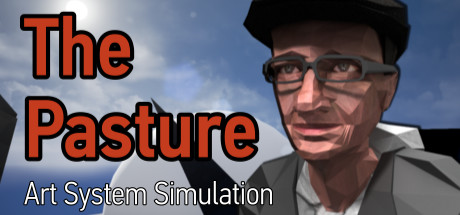
Born
2017-01-16
Game Over
2021-08-25
Lifespan (4.6 years)
Vital Signs
Advertisement
Autopsy Report
Autopsy Report
The Pasture didn’t die. You can’t kill something that was never alive.
Priced at A$0.75 and published by Sometimes You — one of Steam’s most prolific dealers of cheap, forgettable games — The Pasture launched in January 2017 promising “truly innovative gameplay” and “experimental possibilities” as a “member of mysterious modern art elite.” What it delivered was a brief, confusing experience that the majority of players who bothered to review it actively disliked: 46% positive, meaning more thumbs down than up. When a game costs less than a dollar and people still feel ripped off, the problem isn’t value for money — it’s value for time.
The ownership numbers hint at the real story. While precise ownership data is unreliable for this title, the telltale signs of bundle distribution are everywhere: 217 reviews from a game priced at A$0.75, with virtually no organic discovery. Most “owners” didn’t buy it — they received it as bundle filler, the digital equivalent of a free pen at a conference that goes straight in the bin.
This is the Sometimes You business model in miniature. Publish micro-priced games, sell keys in bulk to bundle sites like IndieGala and Fanatical at fractions of a cent per key, inflate the owner count, and let Steam trading card farming generate passive revenue. It’s a volume play where individual game quality is irrelevant to the publisher’s bottom line. The Pasture is one of over 100 titles in the Sometimes You catalog, most following the identical lifecycle: launch cheap, bundle aggressively, accumulate phantom owners, fade into the void.
Real revenue from direct sales was likely under A$5,000. At A$0.75 per copy, even a generous estimate of 5,000 organic purchases yields A$3,750 gross. After Steam’s 30% cut and the publisher’s share, developer Mikhail Maksimov probably earned less than A$1,500 from this game — a number that explains why the developer model isn’t “make a good game and sell it” but “make many cheap games quickly.”
The review trickle of 1.9 per month over 56 months tells its own story. No launch spike, no late-discovery moment, no viral meme. Just a slow drip of bundle recipients occasionally checking what they’d been given and overwhelmingly shrugging — or worse. The nudity tag that might have driven curiosity clicks converted poorly to satisfaction. Players who came for cheap thrills found a game that couldn’t even deliver on that modest promise.
As of the last check, exactly 1 person was playing The Pasture. Probably by accident.
Key Failure Factors
-
Fundamentally Unfun: A 46% positive review score at a A$0.75 price point is damning. Players set their expectations at “anything mildly entertaining for 15 minutes” and The Pasture failed to clear that bar for the majority. The “experimental art” framing couldn’t disguise the absence of compelling gameplay.
-
Bundle Stuffing Masquerading as Success: While precise ownership data is unreliable, the pattern is clear: virtually all “owners” received the game through bulk bundle distribution and never intentionally engaged with it. With only 217 reviews from a mass-distributed title, fewer than 1% of recipients likely ever launched it.
-
Provocative Tags, Empty Product: The nudity tag combined with bargain-basement pricing drove curiosity clicks, but curiosity is not a retention strategy. Players drawn by provocative tags have the lowest tolerance for poor quality — they came for cheap thrills and punished The Pasture for failing to deliver even that.
-
The Sometimes You Pipeline: As one entry in a 100+ title catalog from a volume publisher, The Pasture was never designed to succeed as a standalone product. It was designed to exist — cheaply, briefly, and profitably at the publisher level through trading card economics and bulk key sales.
Lessons for Developers
-
Bundle ownership is not real ownership. The Pasture’s mass-distributed copies produced only 217 reviews and 1 concurrent player. Bundle distribution inflates ownership numbers without creating an audience. If your game’s ownership is driven by bundles, you have downloads, not players.
-
Mixed reviews at micro-prices signal a design crisis. When players leave negative reviews on a A$0.75 game, they’re not complaining about price — they’re saying the game wasted their time. The 46% positive score means The Pasture couldn’t justify even the minimal time investment of trying it. That’s a product problem, not a pricing problem.
-
The shovelware model enriches publishers, not developers. Sometimes You’s volume model works because risk is distributed across 100+ titles. For the individual developer, the economics are brutal: A$0.75 price, tiny organic sales, sub-A$1,500 likely earnings. The developer subsidizes the publisher’s portfolio without building any audience, reputation, or career capital.
-
Provocative content is not a marketing strategy. The nudity tag drove some discovery but converted to negative sentiment. Players who click on provocative tags expecting entertainment are the harshest critics when a game fails to deliver substance behind the bait.
Related Deaths
- The entire Sometimes You catalog — Dozens of micro-priced titles follow the identical lifecycle: launch, bundle, inflate, forget. The Pasture is representative, not unique.
- Steam’s 2015-2018 asset flip era — Thousands of minimal-effort games flooded the platform during Steam Greenlight’s lowest-barrier period, creating a quality crisis that eventually forced Valve to implement Steam Direct and algorithmic curation changes.
- Goat Simulator (contrast) — Proof that absurdist, joke-adjacent games can succeed massively when they’re genuinely entertaining and well-marketed. The Pasture had the absurdism without the fun.