OFFICIAL DEATH CERTIFICATE
SUPERVIVE
Theorycraft Games
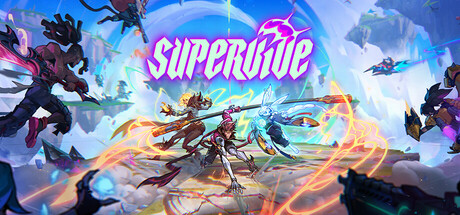
Born
2025-07-22
Game Over
2026-02-01
Lifespan (0.5 years)
Vital Signs
Advertisement
Autopsy Report
Autopsy Report
SUPERVIVE is the cruelest kind of failure: a game that players genuinely loved and nobody played. With an 86% positive review rate from nearly 24,000 reviews, it was better-received than most games that survive for years. But in the battle royale market of 2025, being good wasn’t enough. You had to be essential — and SUPERVIVE, for all its quality, was nobody’s essential game.
Theorycraft Games had the pedigree to make something special. Founded by former Riot Games veterans who understood competitive multiplayer at the highest level, the studio built a battle royale that fused MOBA-style hero abilities with squad-based aerial combat across floating sky arenas. The pitch was ambitious: take the strategic depth of League of Legends and inject it into the adrenaline of a battle royale. The 86% positive review rate confirms they pulled it off mechanically. Players who engaged with SUPERVIVE’s build-crafting system and multi-squad teamfights found something genuinely unique.
The problem was the market, not the product. By mid-2025, the battle royale genre was a closed shop. Fortnite had evolved into a cultural institution. Apex Legends owned the hero-ability BR niche that SUPERVIVE targeted. PUBG still held its audience. Call of Duty’s Warzone absorbed the mainstream shooter crowd. For a new entrant, even a well-made one, the question wasn’t “Is this game good?” but “Is this game worth switching from the BR I already play with my friends?” For the overwhelming majority, the answer was no.
The MOBA-BR hybrid concept — SUPERVIVE’s key differentiator — may have actually worked against it. The game’s description pitches “theorycraft builds” and “gamebreaking loadouts,” vocabulary that speaks to the MOBA audience. But MOBA players were home in League of Legends and Dota 2. BR players wanted quick drops and gunfights, not build theory. SUPERVIVE sat in the gap between these audiences, and that gap turned out to be a void. Previous attempts at this mashup — Spellbreak being the most notable — had already proven the audience for ability-based battle royales was structurally too small.
The review velocity tells a bittersweet story: 2,777 reviews per month across a nine-month lifespan. That’s strong initial curiosity, driven by the Riot developer pedigree and genuine word-of-mouth from satisfied players. But the collapse to 16 concurrent players within nine months reveals that trial didn’t convert to retention. Players downloaded SUPERVIVE, enjoyed a few sessions, and returned to Apex or Fortnite where their friends were already playing. Network effects in multiplayer games are merciless — the best game doesn’t win, the most populated one does.
The PC-only launch compounded the isolation. In a genre where cross-platform play had become standard, restricting SUPERVIVE to PC immediately capped its potential audience and eliminated the social network effects that drive BR retention. Your console friends couldn’t join you, which meant you couldn’t bring your squad, which meant you queued alone, which meant queue times grew, which meant fewer players queued, which meant death.
Theorycraft Games shut down SUPERVIVE in February 2026, barely nine months after launch. The studio that set out to redefine the battle royale had instead provided the definitive proof that the genre’s window for new entrants had closed. The 16 remaining players at the time of data collection weren’t playing a game — they were attending a wake.
Key Failure Factors
-
Saturated Market with Entrenched Network Effects: Fortnite, Apex Legends, and Warzone had locked down the battle royale audience. Players had years of investment — skins, ranks, muscle memory, friend groups — in existing games. No amount of quality could overcome that switching cost.
-
MOBA-BR Hybrid Fell Between Two Audiences: The build-crafting depth attracted neither pure BR players (who wanted simpler drop-and-shoot) nor MOBA players (who wanted lane-based strategy). The hybrid identity made word-of-mouth impossible — you couldn’t explain the game in one sentence.
-
PC-Only in a Cross-Platform Genre: Launching without console or cross-play support in 2025 was a self-imposed handicap. The social network effects that sustain BRs require maximum platform reach.
-
Late Entry into a Closing Genre Window: The battle royale genre peaked in cultural relevance around 2020-2021. Launching a new BR in July 2025 was approximately three years too late for organic market entry.
Lessons for Developers
-
Quality is necessary but not sufficient in network-effect markets. SUPERVIVE’s 86% positive review rate would be the envy of most studios, but in multiplayer genres with entrenched incumbents, the best game doesn’t always win — the most populated one does. Your go-to-market strategy matters more than your game design once a genre is consolidated.
-
Genre hybrids need one clear identity to market. If your elevator pitch requires explaining two genres, you’ve lost the casual audience. SUPERVIVE’s MOBA-BR fusion was a brilliant design concept and an impossible marketing concept. Lead with one identity and let players discover the depth.
-
Studio pedigree opens doors but doesn’t fill servers. The Riot Games connection drove press coverage, streamer attention, and initial downloads. But once players were in the game, they judged SUPERVIVE against the BRs they already played — and pedigree doesn’t make queue times shorter.
-
Don’t launch a multiplayer game on one platform in a cross-platform world. Battle royale’s biggest successes all achieved cross-play. A PC-only launch in 2025 immediately capped SUPERVIVE’s audience below the threshold needed for healthy matchmaking.
Related Deaths
- Spellbreak — Another ability-based battle royale hybrid that earned positive reviews but couldn’t sustain a player base, proving the MOBA-BR niche is structurally too small.
- Hyper Scape — Ubisoft’s urban BR with unique vertical traversal mechanics that died within a year despite AAA backing, showing that novel mechanics alone can’t crack a consolidated market.
- Darwin Project — A show-format BR with innovative mechanics that failed to retain players against established competition, another entry in the “good BR, wrong timing” category.
- Realm Royale — Hi-Rez’s fantasy BR that spiked in popularity and collapsed rapidly, demonstrating the pattern of high trial / low retention in the saturated BR market.