CRITICAL CONDITION REPORT
Stormgate
Frost Giant Studios
Born
2025-08-04
Status: Declining
2026-04-04
Lifespan (0.7 years)
Vital Signs
Advertisement
Autopsy Report
Autopsy Report
Thirty-five million dollars, a roster of StarCraft II veterans, and the most enthusiastic RTS community in a decade produced a game with 25 concurrent players. Stormgate is the most expensive proof yet that nostalgia is not a design document.
Frost Giant Studios was founded on a promise. Tim Morten and Tim Campbell — leads on StarCraft II and Warcraft III — left Blizzard to build the RTS that the company had abandoned. The pitch was irresistible: the people who made the greatest real-time strategy games in history would make a new one, free-to-play, for the millions of fans that Blizzard had left behind. Investors believed it to the tune of $35 million. The community believed it with petition signatures and crowdfunding dollars.
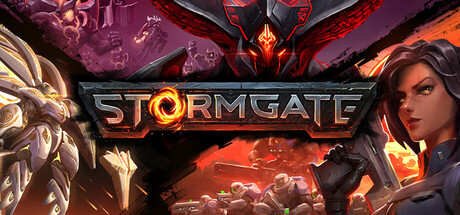
What they got was a 48% positive review score — meaning more than half of the 9,111 people who reviewed Stormgate actively disliked it. The art direction drew immediate and sustained fire: generic, mobile-game-adjacent character designs that looked nothing like the handcrafted aesthetic of StarCraft or Warcraft. Units lacked personality. Factions felt derivative. The campaign, which was supposed to showcase the studio’s narrative ambitions, was dismissed as forgettable filler. The game that was supposed to carry the torch for competitive RTS looked and felt like a budget imitation of the games its creators had already made.
The market misread was equally devastating. Frost Giant built their business plan on the assumption that millions of RTS players were underserved. The data tells a different story. The competitive RTS audience — the people who played 1v1 StarCraft at a serious level — has been shrinking for over a decade, migrating to MOBAs, auto-battlers, and grand strategy. The players who remained were already served by StarCraft II (still free, still active), Age of Empires IV, and a constellation of indie strategy games. Stormgate wasn’t filling a market gap. It was shouting into a room that had already emptied.
The free-to-play model couldn’t solve the fundamental problem. An estimated 1-2 million people downloaded Stormgate, but free entry can’t lower the barrier to competence. New players got obliterated by experienced opponents, bounced off the learning curve, and left. The 1,123 reviews per month reflects not engagement but a revolving door: arrive, lose, write a disappointed review, uninstall.
The decline was not gradual. From early access in mid-2024 through the 1.0 launch in August 2025, the player count fell off a cliff that never leveled out. By late 2025, concurrent players were in the triple digits. By April 2026, with online services shutting down, 25 people were playing a game that cost $35 million to build. Zero average playtime over the last two weeks means even those 25 may be idle connections rather than active players.
Stormgate is the purest example of the nostalgia trap in gaming. A team of legends raised a fortune to recreate magic they’d once been part of — only to discover that the magic was contextual. It belonged to Blizzard’s ecosystem of peer review, massive QA, iconic art direction, and institutional knowledge accumulated over decades. Strip the veterans from that ecosystem and give them a startup budget, and what you get is not StarCraft. What you get is Stormgate.
Key Failure Factors
-
Generic Art Direction: The single most criticized element. Stormgate’s visual identity looked closer to a mobile game than to StarCraft or Warcraft. In a genre where personality is everything — where players need to love their race — the factions were forgettable.
-
Shrinking Genre, Wrong Bet: The competitive 1v1 RTS audience has been declining for over a decade. Building a $35M game for this market required either radical innovation or flawless execution of the classic formula. Stormgate delivered neither.
-
Free-to-Play Can’t Fix Retention: Making the game free brought 1-2 million downloads but zero long-term retention. Competitive RTS has a brutal learning curve that no business model can smooth over.
-
Pedigree Doesn’t Transfer: The ex-Blizzard team’s resumes were the studio’s primary asset. But individual talent extracted from a world-class organization doesn’t automatically reproduce that organization’s output.
Lessons for Developers
-
Past credits are not a product. Frost Giant sold investors and fans on StarCraft pedigree, but the individuals who thrive inside a large studio’s ecosystem may not replicate that quality independently. Evaluate studios on shipped independent work, not resume lines.
-
A shrinking market needs reinvention, not iteration. Competitive RTS is smaller every year. Entering that market with a game that plays like a less-polished StarCraft is a losing strategy. If the genre’s audience has moved on, you need to give them a reason to come back — not a reminder of where they left.
-
Free-to-play works when the first hour is fun for everyone. In competitive RTS, the first hour for a new player is usually a series of crushing defeats. Free entry gets people through the door, but it can’t make them stay when the experience on the other side is punishing.
-
Art direction is identity, not decoration. Players chose Protoss or Zerg because those factions had soul. Stormgate’s factions were functional but anonymous, and in a genre built on faction loyalty, anonymous is fatal.
Related Deaths
- Artifact — Valve’s Dota card game proved that even the strongest brand in PC gaming can’t override market expectations when the product misreads its audience.
- Dawngate — EA’s attempt at a MOBA from a studio of industry veterans, shut down within a year when it couldn’t crack an entrenched market despite solid fundamentals.
- Lawbreakers — Cliff Bleszinski’s arena shooter from a legendary developer that launched into a hostile market and died within months.
- Battleborn — Gearbox’s hero shooter that proved being technically competent in a crowded genre isn’t enough to survive.