OFFICIAL DEATH CERTIFICATE
Skyforge
Allods Team / Innova Co
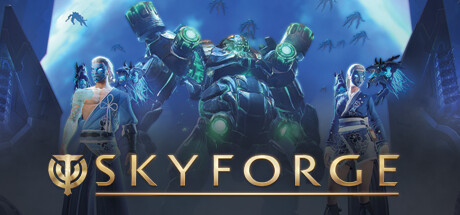
Born
2015-07-16
Game Over
2025-09-01
Lifespan (10.1 years)
Vital Signs
Advertisement
Autopsy Report
Autopsy Report
Skyforge survived for a decade, and somehow that makes its death sadder, not less. A ten-year MMO doesn’t die in a spectacular crash — it dies the way a building decays when nobody maintains it: slowly, quietly, and with a “Mixed” review score that reads like a shrug from an entire genre.
Launched in July 2015, Skyforge arrived with one genuinely innovative idea: a class-switching system that let players change between 18+ classes on a single character, eliminating the MMO tradition of rolling alts. Designed in part by Obsidian Entertainment, set in a sci-fi universe where players became Immortals defending planet Aelion, Skyforge had the ingredients for a long life: a unique hook, multi-platform availability, and the free-to-play model proven by Warframe and Path of Exile.
What it also had, and what ultimately killed it, was a monetization model that players describe in two words: pay-to-win. The 60% positive review rate from 4,360 Steam reviews — placing it firmly in “Mixed” territory — is the accumulated verdict of a decade of players discovering that Skyforge’s most interesting systems were gated behind premium currency. The Prestige progression system, the game’s primary advancement metric, became increasingly tied to spending rather than playing. Classes that the description proudly advertises as switchable were accessible in theory but progression-locked in practice. The innovation that was supposed to be Skyforge’s competitive advantage became the monetization’s delivery mechanism.
The numbers are stark. Only 4,360 total reviews across eight years on Steam — 39.9 reviews per month, a near-flatline. The estimated 500,000 to 1,000,000 owners with a 115:1 owner-to-review ratio tells the real story: people downloaded the free game, bounced immediately, and never looked back.
Publisher instability compounded the damage. Skyforge passed through multiple corporate hands, ultimately ending under Innova Co SARL. Each transition brought new monetization priorities and disrupted the fragile trust between the game and its remaining community. MMO players invest hundreds of hours; they need to trust their stewards. Skyforge’s revolving door signaled the opposite — a revenue asset to be optimized, not a world to be nurtured.
The content pipeline increasingly prioritized cash shop additions over gameplay. Updates focused on monetizable items and progression accelerators rather than dungeons or endgame content. Players watched the game transform from an MMO with monetization into a monetization platform with MMO dressing.
Zero concurrent players at the time of data collection. Not “nearly zero” — zero. After a decade of operation, multiple platform launches, and an innovative core system that players genuinely admired, Skyforge ended with an empty server and a “Mixed” review score. The September 2025 shutdown was less an event than an acknowledgment: the building had been empty for years. Someone finally turned off the lights.
Key Failure Factors
-
Pay-to-Win Progression Gating: Skyforge’s Prestige system progressively gated meaningful advancement behind premium currency purchases. In an MMO market increasingly intolerant of pay-to-win (after years of debate around Black Desert Online, Lost Ark, and others), this approach drove away both new and veteran players.
-
Publisher Instability Over a Decade: Multiple publisher transitions disrupted content strategy, monetization terms, and community trust. MMO players need stable stewardship; Skyforge offered a revolving door.
-
Cash Shop Content Prioritized Over Gameplay Content: Updates increasingly focused on monetizable items rather than dungeons, story content, and endgame activities. The game slowly transformed from an MMO with microtransactions into a microtransaction platform with MMO elements.
-
Innovative Class System Used as Monetization Vector: The 18+ class switching system — Skyforge’s greatest innovation — became the mechanism for monetization rather than retention. Gating access to the feature that should have kept players engaged turned the game’s strength into its weakness.
Lessons for Developers
-
Pay-to-win is slow poison, not fast revenue. Skyforge’s monetization generated enough income to keep servers running for a decade, but it did so by burning through players faster than it could acquire them. The 60% “Mixed” review score is the cumulative damage of ten years of monetization friction. A fairer model might have produced less revenue per player but retained enough players to still be running today.
-
Don’t monetize your best feature. Skyforge’s class-switching system was genuinely innovative — the kind of feature that players would have evangelized. Instead, gating class progression behind spending turned the game’s most compelling quality into its most frustrating one. Your best feature is your retention engine; using it as your monetization engine converts goodwill into revenue until you run out of both.
-
Publisher stability is an MMO’s immune system. Every publisher change disrupted Skyforge’s relationship with its community. MMO players invest deeply and need to trust that their investment will be respected. If your game’s publishing future is uncertain, that uncertainty will bleed into player retention.
-
Look at Warframe, then look at yourself. Warframe launched in 2013 with a similar pitch — free-to-play action game with class switching. It thrived for over a decade through fair monetization and relentless content updates. Skyforge launched two years later with a similar concept and died because it chose extraction over investment. The comparison is instructive and damning.
Related Deaths
- ArcheAge — Another MMO killed by pay-to-win monetization despite featuring innovative systems (sandbox building, naval combat) that players loved in isolation from the business model.
- Bless Online — A F2P MMO with publisher instability and monetization controversies that died within years of its Western launch, following a remarkably similar trajectory.
- WildStar — An MMO that launched with innovative ideas (housing, telegraph combat) but couldn’t sustain a player base against monetization and content issues, shutting down after four years.
- Marvel Heroes — A F2P action RPG that operated for years before mismanagement and monetization problems led to an abrupt shutdown.