CRITICAL CONDITION REPORT
Skull and Bones
Ubisoft Singapore
Born
2024-02-16
Status: Declining
2026-04-04
Lifespan (2.1 years)
Vital Signs
Advertisement
Autopsy Report
Autopsy Report
In 2013, Assassin’s Creed IV: Black Flag shipped one of the most beloved features in Ubisoft’s history — naval combat. Players sailing the Caribbean, firing broadsides, and boarding enemy vessels generated a singular demand: give us a whole game of this.
Ubisoft spent eleven years and an estimated $200 million trying. What they delivered was a game where you can’t get off the boat.
Skull and Bones was announced at E3 2017 with a trailer promising exactly what Black Flag fans wanted: open-world pirate combat with friends. The money was unlimited — Ubisoft funded multiple complete reboots, each burning years and tens of millions. The game shifted from PvP naval combat to a live-service open-world experience, then shifted again. Creative leads cycled through. The vision mutated with each restart until the final product resembled none of its predecessors.
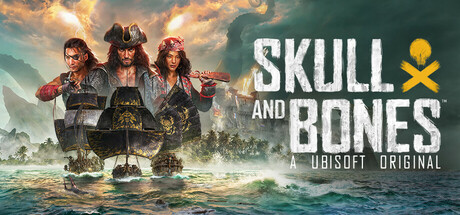
The game that finally launched in February 2024 — seven years after announcement and over a decade into development — was a ship management game wearing a pirate costume. The boarding combat that defined Black Flag? Reduced to a cutscene. On-foot exploration? Minimal and hollow. Sword fighting? Absent. Players controlled ships, not pirates. The pirate fantasy was replaced by hull upgrades and cargo management.
The Steam data reveals the depth of rejection. Just 3,763 total reviews at 68% positive is catastrophically low for a Ubisoft AAA title — comparable games routinely generate 20,000-50,000+. The estimated 50,000-100,000 Steam owners means the game failed to convert even the Black Flag audience that had been explicitly asking for it.
The 242 concurrent players with an 11-minute average session paints the picture of a ghost ship. A multiplayer world designed for “up to 20 players” can’t function with 242 people total across all servers worldwide. The seas aren’t dangerous — they’re empty.
The price tells its own story. Skull and Bones launched at $70 full AAA pricing. The Steam version arrived six months later at CDN$39.99 — nearly 50% off before its first anniversary. When a publisher cuts price that aggressively, that quickly, they’re not running a sale — they’re in triage.
Meanwhile, Sea of Thieves has spent since 2018 proving what a pirate game looks like when it understands its audience. Rare built a game where players actually play as pirates — sword fights, island exploration, buried treasure, kraken attacks, and social chaos that makes every session a story. Sea of Thieves has maintained millions of players across years. The game Skull and Bones was supposed to be already exists.
Eleven years, $200 million, and the world’s largest gaming publisher. Two hundred and forty-two players.
Key Failure Factors
-
Development Hell Destroyed Creative Vision: 11+ years with multiple complete reboots meant the final product was a compromise of every vision rather than a realization of any.
-
The Pirate Fantasy Without the Pirates: Players wanted to board ships, fight with swords, explore islands, find treasure. Skull and Bones gave them ship management. The expectation mismatch doomed the game regardless of execution quality.
-
Sunk Cost Drove Continued Investment: Ubisoft kept funding reboots because each additional investment was small relative to what was already spent. Rational cancellation was repeatedly deferred.
-
Sea of Thieves Already Won: By 2024, Sea of Thieves had cornered the pirate game market with a proven, content-rich product that delivered everything Skull and Bones couldn’t.
-
50% Price Cut Within a Year: The rapid reduction signaled that even Ubisoft had lost confidence, further discouraging new buyers.
Lessons for Developers
-
Kill failing projects early — sunk costs are sunk. Every dollar already spent is gone. Set kill criteria before a project starts. If a game has been rebooted twice without progress, the third reboot won’t fix it — the problem is the project itself.
-
Understand what your audience wants from the fantasy. “Pirate game” means swashbuckling, treasure, adventure, and freedom — not ship management. Before building around a fantasy, study what players actually do in that fantasy.
-
A decade-old game shouldn’t be your best benchmark. Black Flag (2013) delivered a more complete pirate experience as a secondary feature than Skull and Bones managed as its entire focus after 11 years.
-
Check if someone already solved your problem. Sea of Thieves launched in 2018 and spent years building the pirate game players wanted. Entering a market where the incumbent delivers your value proposition requires a dramatically better product — not just a bigger budget.
Related Deaths
- Anthem — Another AAA live-service game that spent years in development hell with shifting vision and launched as a hollow shell of its promise.
- Marvel’s Avengers — IP-driven live-service game that couldn’t sustain players despite massive brand power, with a similarly thin content offering.
- Babylon’s Fall — Square Enix’s live-service game that launched to near-zero players, another casualty of the “everything must be a service” mandate.
- Redfall — Arkane’s failed pivot to live-service co-op, another case of publisher-mandated genre mismatch.