CRITICAL CONDITION REPORT
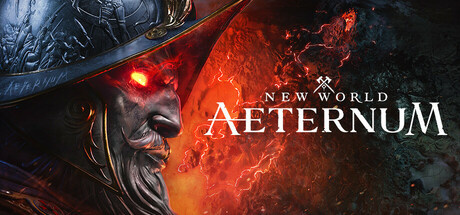
New World: Aeternum
Amazon Game Studios
Born
2021-09-27
Status: Declining
2024-12-01
Lifespan (3.2 years)
Vital Signs
Advertisement
Autopsy Report
Autopsy Report
Nine hundred and thirteen thousand people logged into Aeternum on launch day. Amazon had spent the better part of a decade and an estimated $500 million building its flagship game. For one glorious week in September 2021, New World was the most-played MMO on Steam, the talk of Twitch, and proof that a tech giant could buy its way into gaming’s most demanding genre.
Then the economy collapsed. Not metaphorically — literally. Within weeks, players discovered multiple gold and item duplication exploits that let anyone create infinite currency. In an MMO, the economy is the circulatory system. When gold becomes worthless, every crafting grind, every trading post listing, every hour spent farming becomes meaningless. Amazon’s response was to disable trading entirely — the digital equivalent of stopping a patient’s bleeding by stopping their heart.
The exploits were bad. The content underneath was worse. New World funneled players through a leveling experience built on copy-pasted settlements, identical fetch quests, and the same three enemy types in different-colored armor. Its tags tell the story of its identity crisis: PvP, PvE, MMORPG, Open World, Adventure, Action. It tried to be everything and mastered nothing. Was it a PvP sandbox? A PvE themepark? A survival game? The answer shifted with every major patch, each pivot attracting a new audience while chasing away the last one.
The numbers are staggering. From 913K peak to 448 today — a 99.95% drop. The 296,558 Steam reviews at 67% positive represent one of the largest review datasets in MMO history: 97,678 negative reviews, each one a person who paid money and felt burned. That’s more negative reviews than most games get total reviews.
The estimated 50-100 million owners (inflated by free trials and Game Pass) makes the 448 current count even more grotesque. For every person playing right now, roughly 100,000 tried it and walked away.
Amazon tried everything. Server merges. Content updates. The Rise of the Angry Earth expansion. Finally, a complete rebrand to “New World: Aeternum” with a console release in late 2024. None worked. Each update produced a smaller, shorter population bump. When Amazon ceased new content development, it was an admission that $500 million couldn’t overcome what FFXIV’s Naoki Yoshida described as the fundamental MMO challenge: players consume content faster than you can create it. Especially when you didn’t create enough to begin with.
The servers still run. A few hundred souls still wander Aeternum. But the game that was supposed to prove Amazon could compete in gaming’s premier genre proved the opposite: you cannot buy genre expertise, and money is no substitute for coherent creative vision.
Key Failure Factors
-
Economy-Destroying Exploits at Launch: Multiple gold and item duplication bugs within weeks destroyed the in-game economy. Amazon’s heavy-handed fixes (disabling trading entirely) caused almost as much damage as the exploits themselves.
-
Content Desert Beneath a Beautiful Surface: The world was built from copy-pasted templates. Identical settlements, recycled enemies, and repetitive fetch quests made leveling feel like running on a treadmill through a painting. The endgame was even thinner.
-
Perpetual Identity Crisis: The game pivoted between PvP sandbox, PvE themepark, and survival game throughout its life. Each shift attracted new players while alienating existing ones. The Aeternum rebrand was the fourth or fifth major identity shift, and by then the audience had given up.
-
No Genre Expertise Despite Unlimited Budget: Amazon spent $500M+ but lacked institutional MMO knowledge. The money went into production values, not design wisdom. Beautiful graphics couldn’t compensate for systems that didn’t create compelling long-term loops.
Lessons for Developers
-
Genre expertise cannot be purchased. Amazon had unlimited resources but no institutional MMO knowledge. FFXIV succeeds with a fraction of the budget because Square Enix understands the genre at a molecular level. Before entering an established genre, hire veterans who have shipped and sustained successful titles in it.
-
An MMO’s economy is a load-bearing wall — test it like one. The duplication exploits made every legitimate player’s effort meaningless. With 97,678 negative reviews, economic integrity is clearly as critical as server uptime. Treat your economy like a security system, not a feature.
-
Commit to an identity before launch. New World’s tag cloud reads like a game trying to be six things at once. Each pivot alienated the audience the previous pivot attracted. From 913K peak to 448 current players, the revolving door of vision changes created a revolving door of players.
-
Rebrands don’t fix retention problems. The Aeternum rebrand with console release was a major repositioning investment. The 448 concurrent players prove it didn’t work. Compare with FFXIV’s A Realm Reborn: that succeeded because they rebuilt the game, not just the marketing.
Related Deaths
- WildStar — Another ambitious MMO that collapsed due to endgame issues and audience fragmentation. Like New World, it tried to serve both hardcore and casual audiences and failed at both.
- Crucible — Amazon’s own previous failure — a hero shooter cancelled, briefly un-cancelled, then permanently killed. The studio’s pattern of expensive failures preceded New World.
- Anthem — BioWare’s live service disaster shares New World’s DNA: enormous budget, no genre expertise, thin content at launch, and a population collapse no post-launch effort could reverse.
- Bless Online — A premium MMO that collapsed under technical problems, attempted a rebrand, and died anyway. The rebrand playbook rarely works in the MMO genre.