OFFICIAL DEATH CERTIFICATE
FBC: Firebreak
Remedy Entertainment
Born
2025-06-16
Game Over
2026-04-04
Lifespan (0.8 years)
Vital Signs
Advertisement
Autopsy Report
Autopsy Report
Remedy Entertainment spent 30 years building a reputation on atmospheric, narrative-driven single-player games. Max Payne. Alan Wake. Quantum Break. Control. Every title was a love letter to weird fiction and authored storytelling, the kind of game you played alone in the dark with headphones on. Then they made a three-player co-op shooter and wondered why nobody showed up.
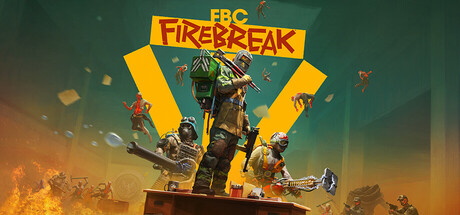
FBC: Firebreak launched on June 16, 2025, wearing Control’s skin but carrying none of its soul. The Federal Bureau of Control — one of gaming’s most intriguing settings, a brutalist labyrinth of shifting rooms and eldritch containment — was reduced to a backdrop for squad-based shooting galleries. Players who had spent dozens of hours exploring the Oldest House’s mysteries in Control were now asked to run through it as a three-person firing squad, clearing waves of Hiss enemies for loot drops.
The 2,228 reviews at 64% positive tell the story of a game that functioned but misread its audience. That’s 228 reviews per month — anemic for Remedy’s caliber. Control generated more discussion in its first week than Firebreak managed in ten months. The “Mixed” Steam label is particularly lethal for co-op: potential buyers check reviews before asking friends to commit, and “Mixed” says “don’t bother.”
The friend pass system — buy one copy, invite friends to play free — was a clever acknowledgment of the co-op population problem. But clever mechanics can’t fix a fundamental demand issue. The friend pass works when the buyer is so excited about the game that they evangelize. With Mixed reviews and a bewildered fanbase, nobody was evangelizing. You can’t give away something people don’t want.
Eleven concurrent players. For a game that requires exactly three players per session, that’s roughly three or four active groups worldwide on Steam. The game cannot fulfill its core promise through public matchmaking. If you bought Firebreak hoping to find partners online, you bought a multiplayer game that is functionally single-player — and not the kind of single-player Remedy is good at making.
The estimated 0-20,000 Steam owners (likely underestimated due to the friend pass) still represents a catastrophic commercial failure. Even at a generous 50,000 sales at A$29.50, that’s under $2 million gross — a rounding error on Remedy’s annual budget. The studio behind one of 2019’s most acclaimed games generated less revenue than a mid-tier indie title.
The real cost is opportunity. Every month on a co-op shooter was a month not spent on Control 2 — the game every Remedy fan wanted. The studio’s most valuable asset is its reputation for singular narrative experiences. Firebreak traded that for a genre exercise nobody asked for, in a market dominated by Helldivers 2 and Deep Rock Galactic.
Key Failure Factors
-
Total Audience Mismatch: Remedy’s fanbase fell in love with atmospheric single-player narratives. Firebreak asked them to play a co-op horde shooter. The people most likely to buy a Control spin-off — Remedy’s existing fans — were the wrong audience for the product. Only 2,228 reviews in ten months proves the disconnect: the built-in audience didn’t convert.
-
Co-op Population Death Spiral: A three-player co-op game is uniquely fragile. Below a critical population threshold, matchmaking fails, which drives away more players, which further degrades matchmaking. With 11 concurrent players, Firebreak crossed this threshold within months and never recovered. The friend pass couldn’t bootstrap a population that organic demand didn’t support.
-
Competing Against Established Co-op Giants: Firebreak launched after Helldivers 2 captured the co-op shooter zeitgeist. Deep Rock Galactic had years of content and community investment. Players already had co-op games with friends — and no reason to leave them for an unknown quantity with Mixed reviews.
-
IP Dilution Without IP Leverage: The Control universe was Remedy’s most commercially successful IP. Using it for a genre exercise that ignored its narrative strengths didn’t leverage the IP — it diluted it. The Oldest House deserved better than serving as a shooting gallery.
Lessons for Developers
-
Don’t sacrifice your studio identity to chase a trend. Remedy’s strength is atmospheric single-player narrative. Turning their most successful IP into a co-op shooter traded their core competency for a generic gameplay loop they had no expertise building. With 64% positive reviews and 11 current players, the market clearly told Remedy what it thought of the genre switch. Studios should expand from positions of strength, not abandon them.
-
Co-op games need guaranteed populations or guaranteed solo viability. A game requiring three players dies the moment matchmaking queues exceed patience. Firebreak’s 11 concurrent players means the game literally cannot function as designed. If you’re building co-op, either launch free-to-play, include robust solo modes, or have such compelling gameplay that word-of-mouth handles recruitment. A paid friend pass with Mixed reviews does none of these.
-
IP affection is genre-specific. Control fans loved the world, the story, the atmosphere. That love didn’t transfer to a co-op shooter set in the same building. IP recognition doesn’t cross genre boundaries — fans of a story-driven game want more stories, not a different game wearing familiar clothes. Before spinning off an IP into a new genre, actually ask the existing audience if they want it.
Related Deaths
- Bleeding Edge — Ninja Theory, another acclaimed single-player studio (Hellblade), created a multiplayer arena game that nobody asked for. Same pattern: beloved studio trades its identity for an unwanted multiplayer genre, with predictable results.
- Crucible — Amazon’s co-op shooter that also failed to find an audience and was pulled from sale. The co-op shooter graveyard is well-populated.
- Evolve Stage 2 — A co-op game that died from the same population spiral: too few players means bad matchmaking means fewer players means death.