OFFICIAL DEATH CERTIFICATE
Exoprimal
CAPCOM Co., Ltd.
Born
2023-07-12
Game Over
2024-04-01
Lifespan (0.7 years)
Vital Signs
Advertisement
Autopsy Report
Autopsy Report
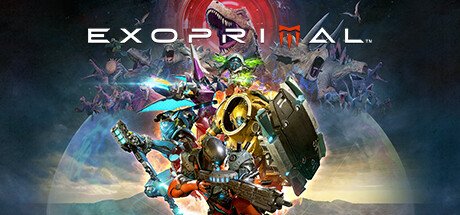
Fight dinosaurs in mech suits. That is one of the best elevator pitches in recent gaming, and Capcom — the company that turned “fight zombies in a mansion” and “hunt monsters with oversized weapons” into billion-dollar franchises — should have been the perfect studio to deliver it. Instead, Exoprimal launched in July 2023, confused its audience within the first match, and bled out to 24 concurrent players within two years.
The premise had genuine power. Five-player teams in a near-future where time rifts vomited dinosaur waves into the world, contained by specialized exosuits. The horde combat was undeniably fun — Capcom’s action expertise showed in every raptor swarm and T-Rex encounter. For the first hour, Exoprimal was everything the trailer promised.
Then the PvP kicked in.
Every match in Exoprimal followed the same structure: cooperative dinosaur combat for the first phase, then a mandatory transition into player-versus-player objectives for the finale. This was the game’s defining design decision, and it was the decision that killed it. The 69% positive review rate across 4,351 reviews crystallizes the divide: players who came for the cooperative dinosaur fantasy were forced into competitive modes they didn’t want, while PvP enthusiasts found the competitive component shallow compared to dedicated shooters. Neither audience got a complete game.
The community consensus was nearly unanimous: a pure cooperative horde shooter would have found a devoted audience. The combat had Capcom polish. The exosuit classes offered meaningful variety. Fighting waves of raptors, pteranodons, and massive prehistoric predators was genuinely thrilling. But every match ended the same way — the dinosaur fantasy interrupted by a competitive mode grafted from a different game.
Capcom’s own catalog made it worse. Monster Hunter offered everything Exoprimal lacked: hundreds of hours of progression, meaningful gear crafting, an ecosystem worth exploring, and pure cooperative focus. Players who wanted Capcom’s “team up and fight big monsters” already had a better option. Exoprimal wasn’t competing with Destiny — it was competing with Monster Hunter, losing to its own publisher.
The business model reflected confused positioning. Full price at launch while simultaneously on Game Pass created a bifurcated audience: browsers who tried it once and paying customers who expected depth. The current A$14.55 price — an 80% discount — tells you where Capcom thinks the value landed. An estimated 100K-200K Steam owners with 24 remaining players represents a retention rate that rounds to zero.
Live service support was minimal and short-lived. Crossover events with Street Fighter and Monster Hunter injected cosmetic novelty but didn’t address the structural identity crisis at the core. Capcom ended live service support less than a year after launch — a quick mercy for a game the publisher clearly recognized as unsalvageable in its current form.
The 24 concurrent players at data collection would be concerning for any multiplayer game, but for a team-based title requiring 10 players per match, it means the game literally cannot function. Matchmaking is impossible. The dinosaurs have won.
Key Failure Factors
-
Forced PvP Ruined the Core Fantasy: The mandatory PvP transition in every match alienated the primary audience — players who came to fight dinosaurs cooperatively. The structural decision to force mode-switching meant no one got the game they wanted.
-
Competing with Capcom’s Own Catalog: Monster Hunter offered a deeper, more rewarding version of the cooperative creature-combat experience. Exoprimal was redundant within its own publisher’s portfolio.
-
Shallow Progression Loop: Compared to the hundreds of hours Monster Hunter or Destiny offered, Exoprimal’s progression was thin. Players experienced the full loop within a few sessions and had no reason to return.
-
Game Pass Inflated Trial, Deflated Retention: Day-one Game Pass created a wave of curious players who experienced the loop once and never came back. The subscription model gave Exoprimal the illusion of an audience without the commitment of one.
-
Premature Live Service Abandonment: Support ended less than a year after launch. The crossover events were cosmetic band-aids on a structural wound.
Lessons for Developers
-
Your hook must align with your loop. Fighting dinosaurs in mech suits is an incredible premise. But if the thing that sells the game — cooperative horde combat against prehistoric creatures — isn’t the thing players spend most of their time doing, you have an identity crisis. The hook gets people in the door; the loop keeps them there. When they diverge, players feel betrayed.
-
Don’t compete with your own portfolio. Capcom already had Monster Hunter — a cooperative creature-combat game with massive depth and a devoted global audience. Exoprimal offered a shallower version of the same fantasy. Before greenlighting a new IP, check whether it cannibalizes your existing franchises.
-
Commitment to one audience beats hedging across two. Exoprimal tried to serve both PvE and PvP players and satisfied neither. Deep Rock Galactic and Helldivers 2 proved that committing fully to cooperative horde combat can build massive, loyal communities. Half-committing builds nothing.
-
Game Pass is a magnifying glass, not a safety net. Subscription services amplify your game’s quality signal. Good games get discovered and retained. Mediocre games get tried once and forgotten faster than they would at retail, because the switching cost is zero.
Related Deaths
- Babylon’s Fall — Square Enix’s live service disaster from PlatinumGames, another premium game that shipped without a clear audience and died within months.
- Bleeding Edge — Ninja Theory’s team-based action game with a similar identity crisis, unable to commit to brawler or competitive multiplayer.
- Anthem — The archetypal live service game that launched with great combat but insufficient content to retain players beyond the first week.
- Evolve Stage 2 — An asymmetric monster-fighting game that proved unique premises need clear, satisfying loops to survive.